
Policy, Issues and Ethics for Professional Practice (MGMT 507 Spring 26)
| Program Overview | ||
|---|---|---|
| Program Title | Policy, Issues and Ethics for Professional Practice (MGMT 507 Spring 26) | |
| Organization | SUNY Potsdam | |
| # of Students Enrolled |
15
|
|
| # of Projects Running |
5 Project/s Added (of 1 Project Expected)
|
|
|
Program Timeline Project Duration |
Start Date: 02/16/26 End Date: 05/10/26 3 months |
|
| Collaboration Overview | ||
|---|---|---|
| About Students |
The students participating in this course are a mix of highly motivated Seniors in undergraduate programs and first-year Master’s students with foundational experience in business analysis, research, and problem-solving. While most have not yet developed a formal business policy, they bring strong analytical skills, an understanding of business needs and functions, and a desire to apply these skills to real-world scenarios. These students are eager to collaborate with industry partners to research complex organizational challenges, explore ethical considerations, and propose actionable policy recommendations.
Student Level: Bachelor Degree Student Time Commitment: Full Time Team Structure: 2 - 5 |
|
| Program Goals | The learning objectives for this collaboration include:
|
|
| Format Structure |
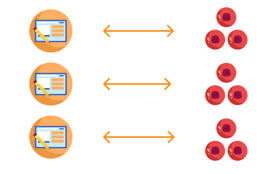
Multiple Projects Multiple Teams |
|
| Format Title | Live Case | |
| Format Description | This collaboration is structured as a live case, providing students with the opportunity to apply ethical reasoning, policy design, and professional judgment to real-world organizational issues.
Industry partners share an authentic business, public policy, or ethical challenge, and student teams research, analyze, and propose actionable policy recommendations. Partners benefit from objective insights, new perspectives, and practical deliverables that can guide strategic or ethical decision-making within their organization. |
|
| Benefits For Industry Partners |
Why participate: Partnering with SUNY Potsdam’s Policy, Issues, and Ethics course connects your organization to emerging business leaders with the curiosity, creativity, and analytical rigor to explore today’s most complex professional challenges.
Outcomes include:
|
|
| Project Modality | Fully Remote | |
| Industry Partner Requirements to Participate | ||
|---|---|---|
| Project Topics | Corporate Social Responsibility Employee and Labor Management Legal, Regulatory, Compliance Organizational Culture Policy Research, Policy Advocacy for Evidence based Policy Making Public Administration Reporting, Financial Planning & Analysis Strategic Planning | |
| Target Industries | Aerospace & Defense Agriculture & Farming Arts & Recreation Biotech & Pharmaceuticals Computers & Hardware Construction, Repair & Maitenance Consulting & Professional Services Consumer Products & Services Education & Ed-Tech Energy & Utilities Fashion & Apparel Finance & Investment Food & Beverage Government Health Care & Life Sciences Insurance Manufacturing & Industrial Media, Publishing & Content Natural Resources Non-Profit & Social Impact Public Works Real Estate Restaurants, Bars & Food Services Retail & E-Commerce Semiconductor Software, AI & Data Sports & Entertainment Telecommunications Transportation & Logistics Travel & Tourism | |
| Skills & Expertise | Business Ethics Compliance Frameworks Conflict Resolution Corporate Governance Data Synthesis Ethical Decision-Making Leadership Policy Design Policy Research Presentation Design Professional Communication Public Administration Qualitative Research Quantitative Research Regulatory Analysis Report Writing Social Impact Analysis Stakeholder Analysis Strategic Problem-Solving Team Collaboration | |
| Location Information & Preferences |
Located Anywhere |
|
| Sponsorship |
No Sponsorship Required |
|
| Compensation |
No Compensation Required |
|
| Other Requirements |
Project Scope: Define an authentic organizational, ethical, or policy challenge that aligns with course goals.
Engagement: Participate in an initial kickoff meeting, midpoint review, and final presentation.
Feedback: Provide timely guidance and feedback to student teams throughout the term.
Accessibility: Assign a project contact to facilitate communication and access to background materials.
Confidentiality (if needed): Establish NDAs for sensitive topics prior to project launch.
|
|
| Expected Time Commitment For Project Managers | 2 Hours per week | |
| Key Program Dates | Due Date |
|---|
Program Timeline
|
Due Date
|
Activities |
Deliverables
|
Status
|
Action | |
|---|---|---|---|---|---|
|
Mon, 03/09/26
2:00 PM
ET
|
Optional: Project Kick Off Meeting w/Climate Steps
|
No Deliverables
No deliverables are required for this action item.
|
|||
|
Location: Virtual
Teams
Instructions:
Join Teams
Please review the project instructions and review Climate Steps' website to familiarize yourself with the project in advance. Come to this session to meet our business partner, Dr. Annette Olson, Founder and Executive Director of Climate Steps. You'll have the opportunity to ask questions, discuss the project, and network. |
|||||
|
Sun, 03/29/26
7:59 PM
ET
|
Required Deliverable
Supporting Work:
This task will help ensure you get started in the right direction by giving our business partner time to review your ideas and give guidance before you complete your final report for Milestone One. |
Required Deliverable
This deliverable has been submitted.
|
|||
|
Deliverable Instructions:
Primary Objective: Create an outline response to milestone one. Submit your outline as a Word document. Use appropriate structure and include your reference list. |
|||||
|
Fri, 05/15/26
7:59 PM
ET
|
Required Deliverable
Please see your project overview document for guidance.
|
Required Deliverable
This deliverable has been submitted.
|
|||
|
Deliverable Instructions:
Please see your project overview document for guidance.
|
|||||
Projects
Filters
| Project | Organization | Topics |
|---|---|---|
| User-Stakeholder Analysis and Social Impact Measurement for “Ripple Effect” Climate Actions | Climate Steps | Corporate Social Responsibility Employee and Labor Management Legal, Regulatory, Compliance Organizational Culture Policy Research, Policy Advocacy for Evidence based Policy Making Public Administration Reporting, Financial Planning & Analysis Strategic Planning |
| Analyzing Mentoring Risks and other Liabilities for Climate Steps | Climate Steps | Climate and Gender Justice Corporate Social Responsibility Digital Marketing Education Quality and STEM Education Operations Product Design & Development Quality Control Research, Analysis, Evaluation Social Protection Talent Management UX/UI & Human-Centered Design |
| Ethical Use of Marketing and Behavior Change Methods in Climate Action Programs | Climate Steps | Climate and Gender Justice Corporate Social Responsibility Customer Service & Account Management Data Management Digital Marketing Education Quality and STEM Education Growth Strategy Information Technology (IT) Innovation Institutional Strengthening Legal, Regulatory, Compliance Marketing Operations Organizational Culture Policy Research, Policy Advocacy for Evidence based Policy Making PR & Communications Product Design & Development Quality Control Research & Development Research, Analysis, Evaluation Social Protection Strategic Planning Sustainability & ESG UX/UI & Human-Centered Design |
| AI Policy Positioning: When “No AI” Becomes “Responsible AI” | Climate Steps | Artificial Intelligence & Machine Learning Climate and Gender Justice Corporate Social Responsibility Customer Service & Account Management Cybersecurity Data Management Digital Marketing Education Quality and STEM Education Growth Strategy Information Technology (IT) Institutional Strengthening Leadership Lean Systems and Process Improvement Marketing Operational Performance and Metrics Operations Organizational Culture Policy Research, Policy Advocacy for Evidence based Policy Making PR & Communications Product Design & Development Quality Control Research & Development Research, Analysis, Evaluation Social Protection Software Design & Development Strategic Planning Sustainability & ESG Sustainable Agriculture Talent Management Training & Development Urban Planning UX/UI & Human-Centered Design |
Program Managers
| Name | Organization |
|---|---|
| Amanda LeDesma | Watertown Extension |